
The United States is set to celebrate the 250th anniversary of its founding
The Belfast Historical Society & Museum is participating in the year-long commemoration. We hope you can join us and also participate in the other local and statewide celebrations.
A highlight this year is the Declaration of Independence Statewide Tour sponsored by the Maine Historical Society. A traveling interpretive experience visiting communities across Maine from July through October 2026, encouraging public dialogue around the words “Life, Liberty, and the Pursuit of Happiness.”
The Dunlap Broadside of the Declaration of Independence from the collection of the Maine Historical Society will be on display in the Abbott Room in the Belfast Free Library August 13, 14 and 15. Learn more about this rare opportunity.
The library also has a full summer of commemorative events planned.
Visit MaineHistory.org to participate in a year-long initiative to commemorate the United States's 250th birthday—our Semiquincentennial
Belfast During the American Revolution
We now approach "the times that tried men's souls" — the stirring days of the American Revolution. When the Declaration of Independence was received, it met the hearty approval of Belfast's inhabitants, who at once "adopted such precautionary measures as were best calculated to secure the independence of the country."
In addition to a committee of safety, the inhabitants elected a censor in 1777, whose duty — as recorded in the meeting minutes — was to "lay before the general court the misconduct of any person by word or action against the United States." In 1778, with entire unanimity, the town adopted the constitution Massachusetts had prepared for its government.
By 1779, the cloud of war began to gather over the colony. Reports of devastation followed one after another: neighboring settlements were plundered, and inhabitants were compelled to flee their homes or face capture. Belfast's settlers determined to remain loyal to the colonial government.
On June 12, 1779, the enemy took possession of Bagaduce (present-day Castine), where, under General McLean, they established a post and garrisoned it with 650 men.
By mid-August 1779, Belfast was abandoned after the ill-fated Penobscot Expedition
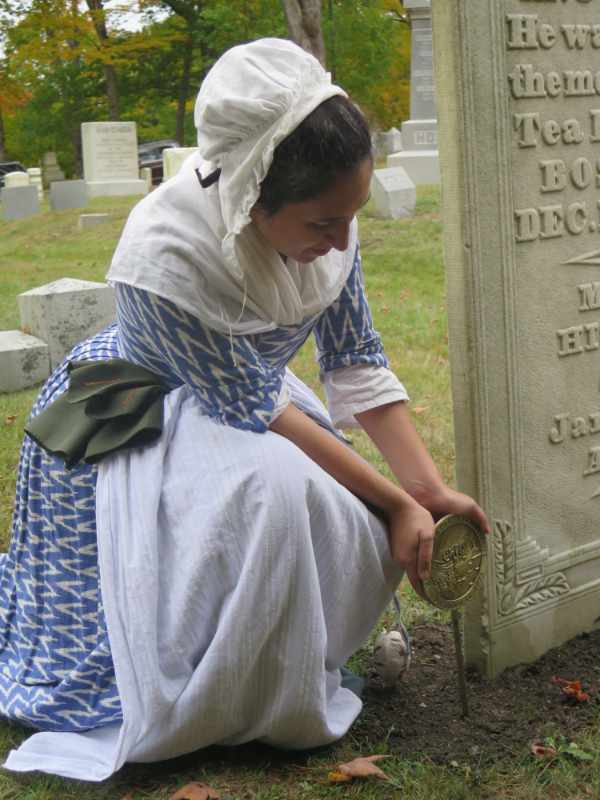
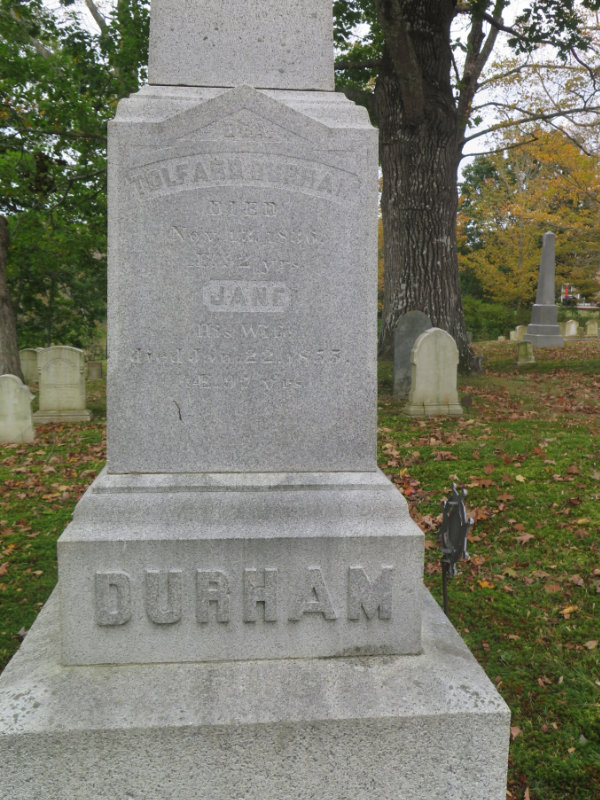
The American fleet had just been badly defeated by the British and neighboring Castine had been taken. Folks in Belfast had been watching with great anxiety the maneuvering of the American and British fleets, and when they saw in the distance the lurid flames belching from the exploding ships, they took it for granted that the enemy had won the day. It was recorded that some had been out in their fields threshing rye and watching the battle unfold. Mrs. Jane Brown Durham, wife of Tolford Durham, lived a long life on the east side and was a witness to what we now call the Failed Penobscot Expedition in August 1779. She recalled, “I saw the American fleet when it came up the bay, and the vessels attacking each other. The sound of the guns was distinctly heard.” One of the first places of refuge for sixty people was Camden, then on to Clam Cove, and some venturing further to Warren, Saco, Bristol and other towns. Many returned to New Hampshire, where family welcomed them.
The people of Belfast fled rather than sign an oath of allegiance to the King of England. When they left that summer, crops were still in the fields and livestock were grazing. At that time, there were 18 families, 109 persons, mostly women and children. Before abandoning their homes, many hid their dishes under logs concealed by branches, and some they sunk in wells. Most people escaped by boat, traveling in craft that they had arrived in just a few years earlier. They traveled south, heading toward Camden and Rockland. Pelatiah Corthell was sent back to Belfast to collect what hay and grain he could. Some others returned to drive away the cattle that remained so that the British would not get them.
In 1780, when a few of the families returned, they found almost everything in ruins. Cattle were gone, houses and mills burnt, fences torn down and windows and doors stripped from houses. Fortunately for Mrs. Tolford Durham, a bed that she had hidden under some logs remained. Others had put valuables down into wells. The house and barn of Samuel Houston were burned by the British. The British also burned the sawmill at the mouth of the Wescott Stream.
Peace was declared Sept. 23, 1783
For a few years following the Revolution, the increase of Belfast was comparatively small.
The names of the heads of the families who left were: John Brown, Alexander Clark, John Cochran, John Davidson, John Durham, Tolford Durham, Samuel Houston, William McLaughlin, John Mitchell, James Miller, James Morrow, Benjamin Nesmith, Nathaniel Patterson, Robert Patterson, William Patterson, William Patterson, 2d. Solon Stephenson, and John Tuft. All, except for Cochran, Miller and Nesmith, resided on the east side of the river. John Mitchell, John Davidson, and Mathew Chambers did not return. In 1786 there were 18 dwelling houses, nine barns, 58 acres of tillage, 75 acres of English mowing, 8 horses, 27 oxen, 36 cows, 45 sheep and 27 swine.
In 1790, seven years following the end of the war, Belfast was less than twenty years old and had been severely disrupted by the Revolutionary War and the subsequent depression. That year the Federal census taker found that Belfast had only 245 persons. In 1790 most of the inhabitants dwelled in crude log cabins, and they lacked the capital for commercial enterprise: to construct stores, wharves, shipping and mills. In 1789 the inhabitants explained to the Massachusetts General Court, “We have nothing to sell but cordwood or a trifle of lumber and that will fetch no money for we own no vessels in the town and are Dependent on those that sail transiently for a market.” In 1792 Belfast possessed no shops, only fourteen frame dwelling houses (the rest were log cabins) two mills, no wharfage, and but 150 tons of shipping. Growth continued, slow and steady.
Visit All Things Liberty learn more about the Penobscot Expedition of 1779.
Permanent Exhibits at the Museum
1864 Civil War Flag Quilt
The Story of How the Quilt Returned Home
In 1864, a group of Belfast ladies made a bed quilt and sent it to the Armory Square Hospital, a Union Army hospital in Washington, D.C. The purpose was to recognize and honor those who had fought to preserve the Union. We know this from a 1917 account written by Augusta Quimby Frederick who, as a young woman, had worked on the quilt. The names of the women who stitched the quilt are inscribed on it, along with patriotic messages, poetry, the names of battles, and more.
On March 11, 2011, 150 years since it was made, the quilt returned to Belfast. The month before, the Museum received a telephone call from a woman in Montana. She offered to send it to the Museum, and, of course, we gratefully accepted.
Restoration
Professional conservation of the Belfast Civil War Flag Quilt is complete, which was performed by Deborah Bede of Stillwater Textile Conservation Studio in Bradford, New Hampshire. Upon inspection, we are fully satisfied, indeed delighted, by the appearance of the quilt and the high quality work done by Ms. Bede.
Since it's conservation the quilt is now prominently displayed as the centerpiece at the Museum.
To learn the rest of the story, watch the video below from our Window on History series — The 1864 Civil War Flag Quilt.
Also on Display
Maritime History
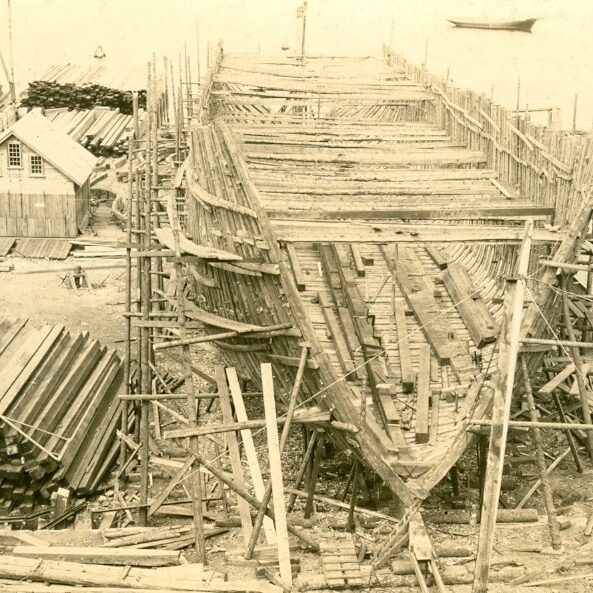
Belfast area shipyards built more than six hundred sailing vessels during the mid–19th century. Nearly one–third of all men were employed in the ship building or maritime trades. Belfast–built vessels were known for their fine lines, speed and beauty. Come and see our collection of paintings, photos and the ship's model of the Charlotte W. White and imagine the life of a seafarer.
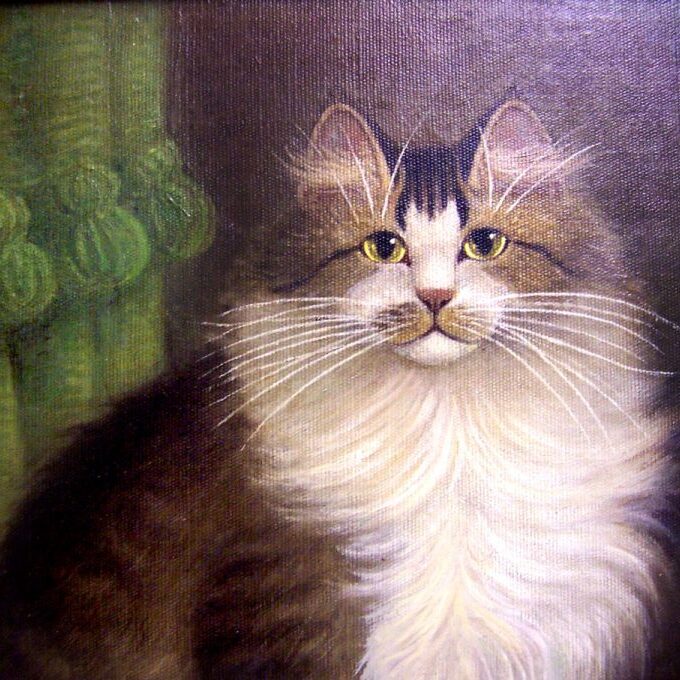
Artist Percy Sanborn
Percy Sanborn is best known for his marine paintings of Belfast–built vessels. During the late 19th century he produced many watercolor and oil paintings of scenes around Belfast, as well as portraits of pets, horses and floral still–lifes.
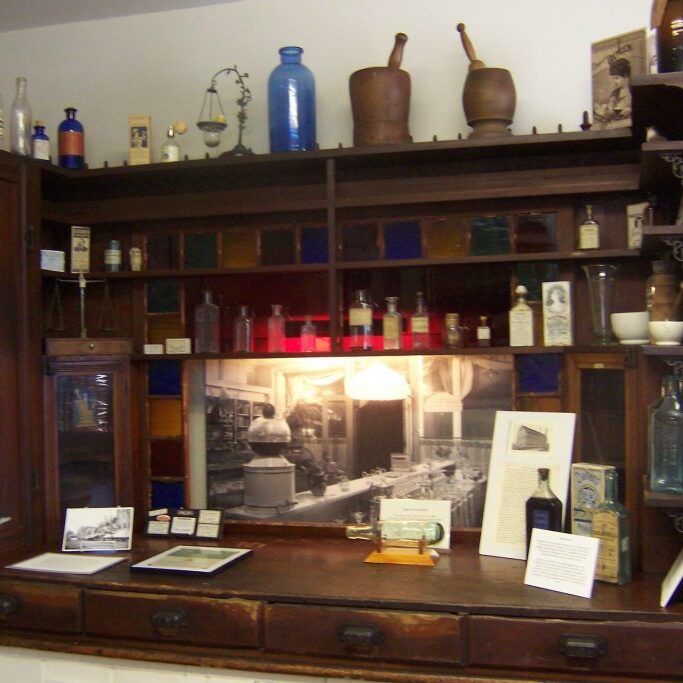
19th Century Apothecary
Dr. William Poor opened his apothecary in 1814. Prior to its closing in the mid–1980s, it was the oldest business operating in Belfast and the oldest drug store in Maine. On display is the pharmacist’s bench and various popular “cures” from the 19th century. A fascinating look back into the evolution of early American medicine.
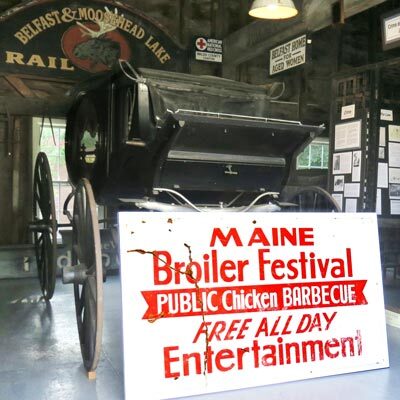
Museum Barn Exhibit
Visitors to the recently renovated barn will enjoy seeing the 19th century horse drawn hearse and the two–cell jail. The jail was built in the 1890’s by the E. T. Barnum Iron Works in Detroit and was housed for many years in the lower level of City Hall. We encourage our visitors to experience the lock–up!
Museum In The Streets
The Belfast, Maine Museum in the Streets® is a heritage-discovery tour which features 30 panels and two large map panels. The tour is made up of photographs and interpretive text describing historic houses, the downtown, the waterfront and a few of our best-known men and women.
All panels give the viewer a sense of place. It is designed as a bi-lingual history walking tour. We have chosen French as the second language in recognition of the Franco-American community within Maine.
On the right are a select few of the panels.
Legendary Firsts
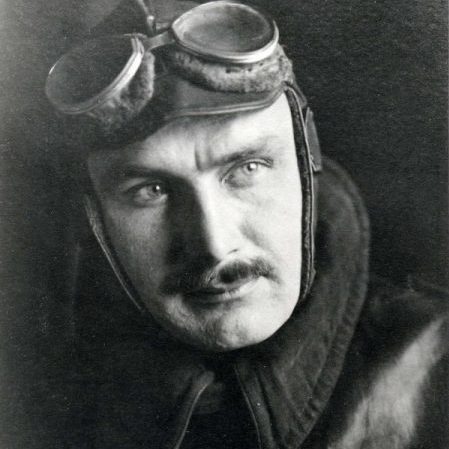
Daredevil of the Skies
Captain Albert W. Stevens, Belfast native son, was an aeronautical pioneer and innovator who made significant contributions to aerial photography in the early 20th century. In 1935, Stevens commanded the flight of “Explorer II”, a helium balloon that soared to an altitude of fourteen miles, a record that stood until 1956. During the flight Stevens took the first ever photograph of the curvature of the earth.
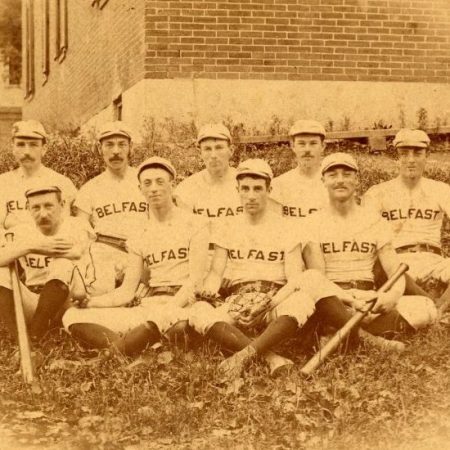
Early Baseball Great American Pastime
Any fan of baseball will recognize the expression, “At bat, on deck and in the hold (hole).” But, did you know the phrase was first coined by a Belfast scorekeeper during a game played on August 7, 1872 between the Belfast Pastimes and the Boston Red Stockings?
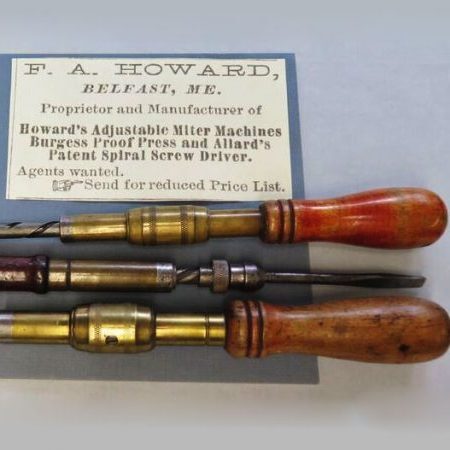
Made In Belfast
Belfast is known for several innovations and inventions which are recognized throughout the world. Did you know the spiral screwdriver, more commonly known as The Yankee Screwdriver, was invented in Belfast? The first patent for this handy tool was awarded to Isaac Allard, local machinist and watchmaker, in August, 1868. The first screwdrivers were also made in Belfast at the Howard Manufacturing Company.
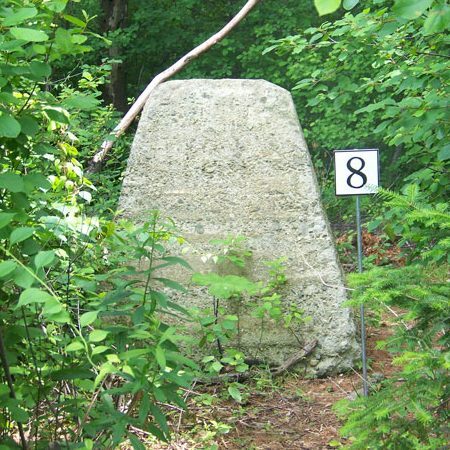
Radio Corporation of America
On March 14, 1925, radio history was made in Belfast. The first long-wave radio broadcast from 2LO London, England was received by the experimental RCA station in Belfast. The site closed in 1929 and was abandoned. In 2003 a search and mapping project uncovered artifacts and other historical information about the station. A recording of that first transmission is part of the museum exhibit. Listen and more about Belfast's RCA station.
Old Ship Models
This model of the Charlotte W. White, a full–rigged ship which was built in Belfast in 1858. Of exceptional quality, the model is so finely detailed that even the tiny compass seems to work.
The return of the Charlotte W. White to her home port of Belfast is in itself an intriguing story. In February of 2006, while conserving and cataloging a collection of papers at the Museum, the archivist came across a letter of inquiry dated April, 1971 from a public library in Elmira, New York. The library had in its possession the ship model which had been brought to Elmira by the White family sometime around 1876, and they were asking for information about the family. The archivist answered the thirty-five-year-old letter with the information and, after further communication, the model was generously donated to the Belfast Museum.
It pays to answer old letters!